
Cuban Charada in English: All 100 Bolita Numbers and What They Mean
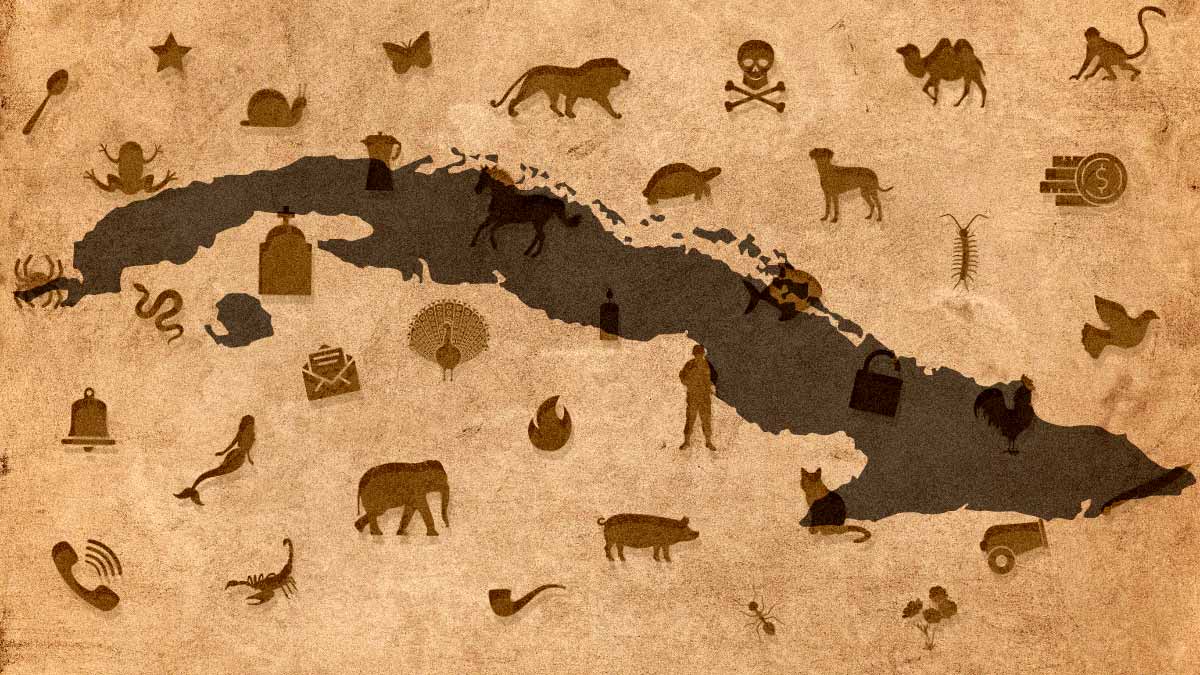
La charada is the Cuban dream dictionary of numbers: a list from 1 to 100 in which every number stands for something — 1 is the horse, 8 is a dead man, 15 is a dog, 24 is a dove. Cubans use it to turn dreams, omens and everyday events into a number to bet on in la bolita, the island’s illegal daily lottery, which takes its winning numbers from the Florida Lottery drawings.
Below you’ll find the full 1–100 list in English, with the original Spanish word for each number, plus how a Florida drawing becomes a Cuban “fijo” and “corridos,” where the tradition came from, and why no two lists are exactly alike.
Updated October 3, 2026
La Charada at a Glance
| Question | Short answer |
|---|---|
| What is it? | A list of 100 numbers, each tied to people, animals, objects or events |
| What is it used for? | Choosing numbers for la bolita, usually based on dreams or daily events |
| Where does it come from? | Numbers 1–36 come from the Chinese charada (rifa chiffá); 37–100 were added in Cuba |
| Which draws decide la bolita? | Mostly the Florida Lottery; some bankers use other US lotteries |
| Florida Pick 3 draw times | 1:30 p.m. and 9:45 p.m. ET, every day |
| Is la bolita legal in Cuba? | No. Gambling has been banned since the 1959 revolution |
| Odds of hitting the “fijo” | 1 in 100 |
The 100 Numbers of the Cuban Charada in English
Each number carries one main meaning that almost every Cuban knows, plus a cloud of secondary ones that vary by region, family and era. The main meaning comes first; the Spanish word is the one you’ll hear in Havana or Hialeah.
Jump to: 1–25 · 26–50 · 51–75 · 76–100
Numbers 1–25
| No. | Main meaning | In Spanish | Other common meanings |
|---|---|---|---|
| 1 | Horse | Caballo | Inkwell; the street nickname for Fidel Castro |
| 2 | Butterfly | Mariposa | Money, man, coffee pot; associated with Raúl Castro |
| 3 | Sailor | Marinero | Little boy, cup; lately associated with Miguel Díaz-Canel |
| 4 | Cat | Gato | Tooth, mouth, key |
| 5 | Nun | Monja | Sea, letter, padlock |
| 6 | Turtle | Jicotea | Reverbero (small kerosene stove) |
| 7 | Snail | Caracol | Excrement |
| 8 | Dead man | Muerto | Pumpkin |
| 9 | Elephant | Elefante | Tongue, lyre |
| 10 | Big fish | Pescado grande | Net |
| 11 | Rooster | Gallo | Cigarette lighter |
| 12 | Prostitute | Ramera | Big kite |
| 13 | Peacock | Pavo real | Big boy, charcoal stove |
| 14 | Cemetery | Cementerio | Tiger cat, lovers, frying pan |
| 15 | Dog | Perro | Pretty girl, spoon |
| 16 | Bull | Toro | Saintly woman, dress |
| 17 | Saint Lazarus | San Lázaro | Moon, nightgown |
| 18 | Small fish | Pescado chico | Palm tree |
| 19 | Earthworm | Lombriz | Flag, big table |
| 20 | Fine cat | Gato fino | Large porcelain jar, chamber pot |
| 21 | Cuban boa | Majá | Money, vest |
| 22 | Toad | Sapo | Lily |
| 23 | Steamship | Vapor | Ladder |
| 24 | Dove | Paloma | Kitchen |
| 25 | Precious stone | Piedra fina | New house, sun |
Numbers 26–50
| No. | Main meaning | In Spanish | Other common meanings |
|---|---|---|---|
| 26 | Eel | Anguila | New doctor |
| 27 | Wasp | Avispa | Canary |
| 28 | Goat | Chivo | Politician |
| 29 | Mouse | Ratón | Hutia (a Cuban tree rat) |
| 30 | Shrimp | Camarón | Almanac |
| 31 | Deer | Venado | Shoe |
| 32 | Pig | Cochino | Mule |
| 33 | Turkey vulture | Tiñosa | Mother, saint |
| 34 | Monkey | Mono | Slave |
| 35 | Spider | Araña | Light bulb |
| 36 | Pipe | Cachimba | Bodega (corner ration store) |
| 37 | Witch | Bruja | Black hen, ant, highway |
| 38 | Hermit crab | Macao | Money, car |
| 39 | Rabbit | Conejo | Snake, dance |
| 40 | Priest | Cura | Blood, bar |
| 41 | Small lizard | Lagartija | Jubo (a small Cuban snake) |
| 42 | Duck | Pato | Faraway country, Spain |
| 43 | Scorpion | Alacrán | Door |
| 44 | Hard times | Año del cuero | Bad weather |
| 45 | Shark | Tiburón | President |
| 46 | Bus | Guagua | Smoke |
| 47 | Bird | Pájaro | Bodyguard |
| 48 | Cockroach | Cucaracha | Hand fan, barbershop |
| 49 | Drunk | Borracho | Coat hanger |
| 50 | Police officer | Policía | Water, mayor |
Numbers 51–75
| No. | Main meaning | In Spanish | Other common meanings |
|---|---|---|---|
| 51 | Soldier | Soldado | Night watchman |
| 52 | Bicycle | Bicicleta | Lawyer |
| 53 | Electric light | Luz eléctrica | Kiss, dynamite |
| 54 | Flowers | Flores | Cannon |
| 55 | Crab | Cangrejo | Bat, bullet |
| 56 | Meringue | Merengue | Queen, shirt, stone |
| 57 | Bed | Cama | Telegram |
| 58 | Portrait | Retrato | Knife, adultery |
| 59 | Madman | Loco | Lobster |
| 60 | Clown | Payaso | Egg |
| 61 | Big horse | Caballo grande | Rice, apothecary |
| 62 | Marriage | Matrimonio | Robbery |
| 63 | Murderer | Asesino | Bandit, police |
| 64 | Big dead man | Muerto grande | Scandal |
| 65 | Food | Comida | Rabbit |
| 66 | Pair of mares | Pareja de yeguas | Kiss; tarro (being cheated on) |
| 67 | Stab wound | Puñalada | Hospital |
| 68 | Cemetery | Cementerio | Quarrel |
| 69 | Well | Pozo | Piano, immigrant |
| 70 | Coconut | Coco | Shirt, jellyfish |
| 71 | River | Río | Government official, crocodile, vase |
| 72 | Ox | Buey | Turtle, necklace, rain |
| 73 | Suitcase | Maleta | Building, bear |
| 74 | Kite | Papalote | Military man, colonel |
| 75 | Necktie | Corbata | Guitar |
Numbers 76–100
| No. | Main meaning | In Spanish | Other common meanings |
|---|---|---|---|
| 76 | Dancer | Bailarina | Factory, dinosaur |
| 77 | Saint Lazarus’s crutches | Muletas de San Lázaro | Banknotes, Italian flag |
| 78 | Sarcophagus | Sarcófago | Dead man, king |
| 79 | Freight train | Tren de carga | Large lizard |
| 80 | Old doctor | Médico viejo | Desperate man, umbrella |
| 81 | Theater | Teatro | Sugar mill |
| 82 | Mother | Madre | Lion, washtub |
| 83 | Tragedy | Tragedia | Walking cane |
| 84 | Blood | Sangre | Banker |
| 85 | Mirror | Espejo | Clock |
| 86 | Scissors | Tijeras | Hose |
| 87 | Plantain | Plátano | Louse, big tree |
| 88 | Eyeglasses | Espejuelos | Worm, drinking glass |
| 89 | Lots of water | Mucha agua | Old house, comet |
| 90 | Old man | Viejo | Candy |
| 91 | Espadrille | Alpargata | Communist |
| 92 | Big hog | Puerco grande | Airplane, balloon, Cuba |
| 93 | Ring | Sortija | Cow, milk |
| 94 | Machete | Machete | Havana |
| 95 | War | Guerra | Big dog, court of justice |
| 96 | Old shoe | Zapato viejo | Suitcases |
| 97 | Mosquito | Mosquito | Cricket, prisoner |
| 98 | Piano | Piano | Saint |
| 99 | Handsaw | Serrucho | Rooster, charcoal maker |
| 100 | Toilet | Inodoro | Automobile |
This list follows the meanings most widely shared in Cuban sources, such as the version kept by Periódico Cubano (in Spanish). Some numbers also carry crude or sexual slang meanings on the street; we’ve left those out.
How Cubans Use the Charada: Dreams, Omens and “Cábulas”
Nobody in Cuba picks a bolita number at random. The point of the charada is to read the world around you and translate it into numbers. That reading is called a cábula (in western Cuba, usually cábala).
Dreams are the classic source. Dream of a dove and you play 24. Dream that a large dog chases you and you play 95, the big dog; if it was a small one, 15. A dream about a wedding points to 62, and one about a death to 8 or 64.
Real life works the same way. Every December 17, the feast of Saint Lazarus, many players bet on 17 (San Lázaro) and 77 (his crutches). Birthdays, anniversaries, a license plate, the number on a bus — all of it can become a cábula.
Politics gets the same treatment. Fidel Castro was “El Caballo,” the horse, so he became number 1, a nickname Cubans used behind his back for decades. His brother Raúl is linked to 2, and in recent years Cubans have tied Miguel Díaz-Canel to 3. When Fidel died in November 2016, many players went straight for 1 and 8, horse and dead man. According to CubaNet (in Spanish), the numbers that actually came up were 40, 97 and 25.
There’s also the acertijo, a riddle passed around the neighborhood whose answer is supposed to be the next winning number. No one ever knows who wrote it. That fits the word itself: in the 18th and 19th centuries, charadas were word-guessing puzzles printed in Spanish and French newspapers.
How La Bolita Works: Fijo, Corrido and Parlé
La bolita has no draw of its own. Bankers on the island use the results of US state lotteries, mainly Florida’s. OnCuba News explains the conversion with a simple rule: drop the first digit of the three-digit result, keep the last two as the main number, and split the following four digits into two pairs.
Here is the example OnCuba uses, step by step:
- The result “up north” is 423 57 80. That’s a three-digit number followed by four more digits.
- The fijo is 23. The 4 is dropped, and the last two digits of the three-digit number become the fijo (“fixed” number), the one that pays the most.
- The corridos are 57 and 80. The four digits are split into two pairs, the corridos (“runners”), which pay less.
- The parlés are 23-57 and 23-80. A parlé is a bet on the fijo combined with one of the corridos. It’s hard to hit and pays the most.
How Much La Bolita Pays
Payouts are set by each banker, not by any official body, so they vary from neighborhood to neighborhood. These are the ranges OnCuba reported, per peso bet:
| Bet | What you need to hit | Typical payout per peso |
|---|---|---|
| Fijo | The main two-digit number | 75 to 100 pesos |
| Corrido | One of the two secondary numbers | 20 to 30 pesos |
| Parlé | The fijo plus one corrido, together | 900 to 1,000 pesos |
Do the math and the house always wins. With 100 possible numbers, a fijo hits 1 time in 100 on average, yet it pays 100 to 1 at most. The banker keeps the difference, and some, as OnCuba documents, quietly skip reporting bets on numbers they don’t want to cover.
Where to Check the Winning Numbers
The cleanest source is the official one. The Florida Lottery publishes every result on its winning numbers page, and its Pick 3 page lists the draw schedule: midday at 1:30 p.m. ET and evening at 9:45 p.m. ET, every day.
Before the internet, Cubans pressed old Soviet-made radios to their ears to catch the numbers from Florida stations through the static. Today the results spread by phone and on Cuban news sites within minutes of each drawing.
Why Different Lists Give Different Numbers
If you compare two charadas, you’ll find disagreements. That isn’t an error; it’s how the tradition works. The first 36 numbers are fairly stable because they come from the Chinese original. Numbers 37 to 100 grew through popular use, and each generation added meanings — a bus, a light bulb, a communist, a politician.
The dove is a good example. Most Cuban lists put it at 24. A WLRN report from Little Havana gives the dove as 27 in its summary of the charada, yet the Hialeah lottery cashier it interviews says a white dove at her window led her to play 0024 — and win $10,000 on Florida’s four-digit game. When lists disagree, Cuban players usually go with the meaning their own family has always used.
The schedule varies too. A 2025 essay published by Words Without Borders describes a Havana collector working to a 2:00 and 8:00 timetable, and an AFP report notes that bankers use results from Florida, Georgia or New York. Your local banker’s rules, not the charada, decide which drawing counts.
A Short History of the Charada
The charada arrived in Cuba in the 19th century with Chinese laborers brought to the island as cheap labor. Their game, the rifa chiffá, had 36 numbers, each drawn as a figure on parts of a human body. Retired Miami-Dade professor Mercedes Sandoval told WLRN that Cubans were influenced by that Chinese version and adapted it into the one still sold in South Florida bodegas.
Enslaved Africans and their descendants are believed to have joined the game early and added their own symbols, and over time the list grew to 100 numbers. By the early 20th century, the charada and la bolita were part of everyday life in Cuba’s cities and countryside alike.
The game crossed the Florida Straits too. Around 1890, bolita reached Tampa’s Ybor City and spread across the state. As the Florida History Blog recounts, it was treated as an illegal racket for about 70 years, fueling bribery and deadly turf wars, until Florida launched its own official lottery in 1986.
In Cuba, the 1959 revolution banned gambling. The casinos closed, but la bolita simply went underground, and it has survived every crackdown since.
Is La Bolita Legal?
In Cuba, no. Gambling has been illegal since 1959, and collectors, bankers and players can face prison. In practice, la bolita runs in nearly every neighborhood, and authorities enforce the ban unevenly. AFP put the average Cuban salary at around $42 a month, and found that many Cubans see a winning number as one of the few ways to get ahead.
In the United States, playing the official lottery is legal for adults. In Florida you must be 18 or older. Private bolita “banks” that take bets outside the state lottery are illegal gambling operations, as they were in Tampa a century ago. Many Cuban Americans in Miami simply use the charada to pick numbers for the Florida Lottery’s own Pick games.
Safety Warnings: Scams Around La Bolita
- Nobody can predict the numbers. Websites, apps and social media accounts that sell “guaranteed” numbers or “insider” tips are scams. Florida’s drawings are random.
- Beware of “results” pages that differ from the official one. Always check against the Florida Lottery’s own site.
- Don’t send money to anyone to “place a bet in Cuba” for you. There’s no legal way to do it and no way to recover the money.
- Know the risk of debt. Collectors interviewed by AFP admit that some players end up deeply in debt. If betting stops being fun, the Florida Lottery’s play responsibly page lists help resources.
Practical Tips for Reading the Charada
- Learn the “big” and “little” pairs. Many numbers have a larger twin: horse 1 and big horse 61, dead man 8 and big dead man 64, dog 15 and big dog 95. Cubans often play both.
- Death and its company. Murderer (63), dead man (8), sarcophagus (78) and cemetery (14 or 68) often travel together in cábulas.
- The same thing can be two numbers. The cemetery is 14 and 68; money shows up under 2, 21 and 38. Choose by context.
- Keep the Spanish words. If you ask a Cuban relative about a number, they’ll answer “el majá” or “la tiñosa,” not “the boa” or “the vulture.” The Spanish column in the table is the one to memorize.
Frequently Asked Questions
What is the Cuban charada in English?
It’s a numbered list from 1 to 100 in which each number represents something: an animal, a person, an object or an event. Cubans use it to turn dreams and daily events into numbers to bet on in la bolita.
What number is dog in the Cuban charada?
Dog is 15. A big dog is 95, which also means war.
What number is death in the charada?
The dead man (muerto) is 8, and the “big dead man” is 64. Related numbers include 78 (sarcophagus) and 14 or 68 (cemetery).
What does number 1 mean in la bolita?
Number 1 is the horse (caballo). Because “El Caballo” was Fidel Castro’s nickname, Cubans also associate 1 with him.
What is the difference between fijo and corrido?
The fijo is the main winning number, taken from the last two digits of the three-digit Florida result, and it pays the most. The two corridos come from the four digits that follow and pay less.
What is a parlé in la bolita?
A parlé is a combined bet on the fijo and one corrido. It’s much harder to hit, which is why it pays around 900 to 1,000 times the bet.
What time are the Cuban bolita numbers drawn?
There’s no Cuban draw. Most bankers use the Florida Lottery, whose Pick 3 drawings take place at 1:30 p.m. and 9:45 p.m. ET daily. Some bankers follow other states’ lotteries and set their own cutoff times.
Where do the charada numbers come from?
Numbers 1 to 36 come from the Chinese charada, or rifa chiffá, brought to Cuba by Chinese laborers in the 19th century. Numbers 37 to 100 were added in Cuba over time.
Is la bolita legal in Cuba?
No. All gambling has been banned since 1959. La bolita still operates underground in most Cuban neighborhoods.
Can I play la bolita from the United States?
Not legally through a bolita bank. What you can do, if you’re 18 or older, is play the Florida Lottery’s official games using numbers chosen with the charada, as many Cuban Americans in South Florida do.
More Cuban Traditions
The charada shares the stage with other popular beliefs. Every January, Cuban babalawos announce the Letter of the Year and its predictions, and many players turn those prophecies into cábulas. For a sweeter side of Cuban street culture, read our story on the Cuban pirulí.
This guide was fully revised and updated on October 3, 2026. Sources: Florida Lottery, OnCuba News, WLRN, AFP, Words Without Borders, Florida History Blog, Periódico Cubano and CubaNet. Charada meanings are part of Cuban popular culture and vary between lists. This article is informational and does not encourage gambling.
